



The Miami Heat aren’t bad enough to bottom out, not good enough to matter, and just consistent enough to keep everyone slightly confused.
For four straight seasons, Miami has lived in the same neighborhood: the play-in. From 2022-23 through the current 2025-26 campaign, the Heat have hovered between seventh and tenth in the Eastern Conference, never quite collapsing, but never truly threatening the league’s upper tier either.
Yes, the 2023 Finals run still stands as one of the most improbable postseason stories in recent memory, but that version of the team feels increasingly distant. The roster has changed, the style has changed, and yet the results remain stuck in neutral.
Ironically, Miami already tried reinventing itself. The grind-it-out, defensive-minded identity that once defined “Heat Culture” has given way to something much faster and far more offensive. This season, the Heat rank near the top of the league in scoring and play at the fastest pace in the NBA. On paper, the change should have raised their ceiling. In reality, it has mostly preserved their middle-of-the-pack existence. The offense is more explosive, but the overall impact looks familiar: competitive, watchable, and ultimately ordinary.
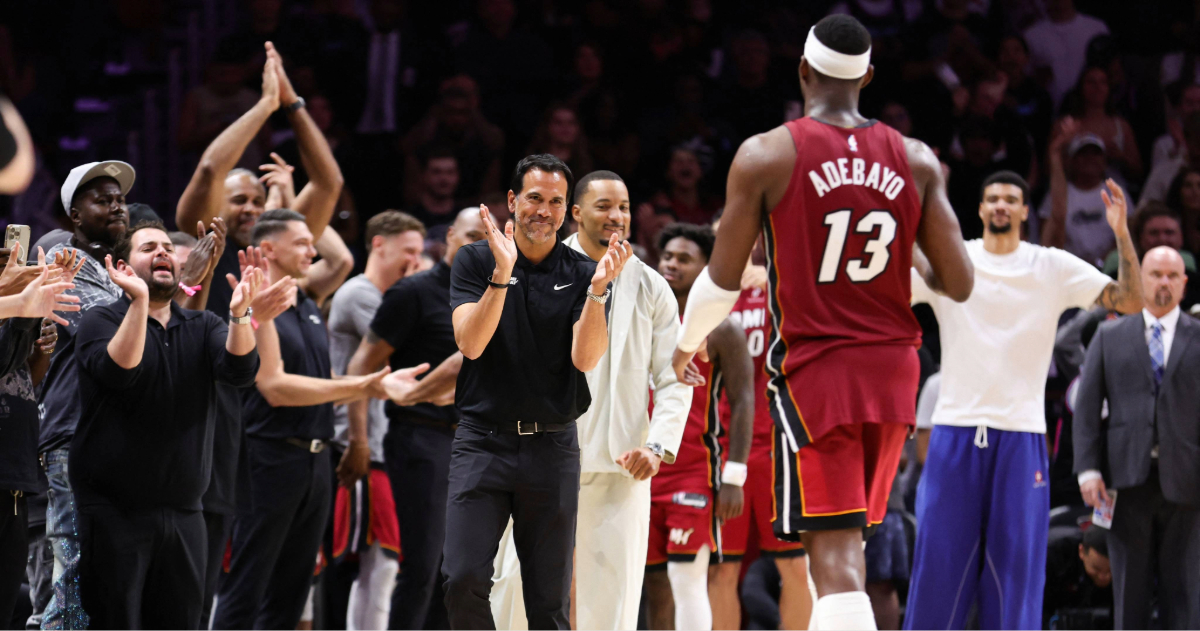
Nothing captures that paradox better than Bam Adebayo’s historic 83-point explosion on March 11. It was the kind of performance that will be replayed decades from now – a jaw-dropping scoring outburst that instantly etched itself into NBA lore. But in the short term, it may have also highlighted the team’s fragility. Since that night, the Heat have stumbled to a 2-7 stretch, sliding to 10th in the East instead of pushing toward the sixth seed. With a 39-36 record and only seven games remaining, Miami once again finds itself staring at the same destination: the play-in.
The roster itself explains why. Adebayo and Tyler Herro are excellent players, both capable of All-Star production and big individual nights. But neither has consistently demonstrated the ability to anchor a true contender. They raise the floor, keep Miami competitive, and ensure the team is rarely outclassed, yet they don’t quite lift the ceiling.
The supporting cast follows a similar pattern. Norman Powell earned his first All-Star nod and has provided scoring punch. Davion Mitchell brings defense and playmaking. Jaime Jaquez Jr. continues to develop into a reliable forward, while rookie Kel’el Ware flashes the tools of a future starting center. It’s a deep, competent rotation filled with players who fit together cleanly. What it lacks is the singular force that tilts the balance.
And so the Heat remain trapped in the NBA’s middle class — too structured to fall apart, too balanced to bottom out, and too limited to break through. They can win any given night, lose just as easily the next, and finish the season right where they’ve been for years.
Right in the middle.