
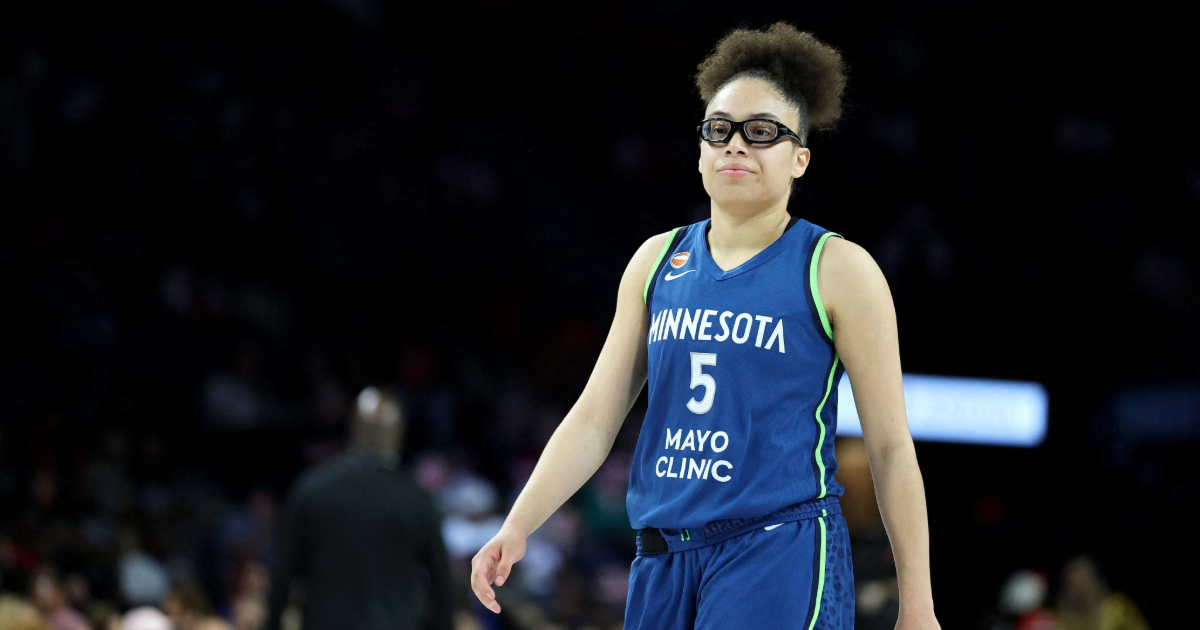



Rookie of the Year feels like a formality for Olivia Miles. MVP? That is where the conversation gets complicated.
The No. 2 overall pick came to Minnesota with enormous expectations, but Miles has done more than meet them. Through August 22nd, the rookie is averaging 20.0 points, 4.6 rebounds, 6.2 assists, and 1.3 steals per game, while shooting 50.1% from the field and 40.4% from three. More importantly, she has helped lead the Lynx to a league-best 31-7 record.
That production becomes even more impressive when considering the circumstances. Minnesota spent much of the season without superstar Napheesa Collier, who missed nearly three months after undergoing surgery on both ankles before returning in July. Miles was therefore asked to help carry a significant share of the offensive responsibility while the Lynx waited for their franchise player to come back.
Miles has not merely survived those expectations; she has flourished under them. She has been an All-Star, a centerpiece of the league’s best team and, at this point, the overwhelming Rookie of the Year favorite. Her MVP case is no longer outrageous, either. After Friday’s win over Washington, Cheryl Reeve made that clear, arguing that “MVP awards should go to teams that are at the top” and adding that Minnesota would not be 31-7 without Miles.
Still, there is a strong argument against handing her the MVP.
For one, A’ja Wilson remains the standard. The Las Vegas Aces superstar is averaging roughly 25.9 points, 9.5 rebounds and 3.1 assists while shooting 51.8% from the field and 40.5% from three. The Aces are also 25-13, giving Wilson an elite individual resume even if her team trails Minnesota.
More importantly, the Lynx are not simply Miles and a supporting cast. They are exceptionally constructed and coached. Kayla McBride, who’s having a career year at age 34, provides elite shooting and perimeter scoring, Courtney Williams brings playmaking and physicality, while Natasha Howard supplies interior scoring, rebounding, and defense. All three have been major contributors to a team that has remained dominant even without Collier.
So perhaps the question is not whether Miles deserves recognition because she unquestionably does. It is whether “most valuable” should favor the most dominant individual season or the player most central to the league’s best team. The answer may ultimately say as much about what the MVP award values as it does about Olivia Miles.