



The NBA offseason was having its usual quiet phase in August. Then, Peyton Watson turned one sign-and-trade into a five-team domino effect.
What initially looked like a straightforward move became a much broader reshuffling of rosters, salary and draft capital. The Cleveland Cavaliers landed Watson from the Denver Nuggets on a four-year, $88 million deal, while the LA Clippers acquired Max Strus. Denver received an unprotected 2031 Cavaliers first-round pick and a 2032 second-rounder from the Sacramento Kings.
The ripple effects went further. Cleveland then sent Tre Mann, a 2027 Clippers second-round pick and cash to Washington for Cam Whitmore, while Dennis Schroder’s earlier move from Cleveland to Charlotte for Tre Mann helped create the financial flexibility that made the larger sequence possible. Washington also sent Julian Reese to Denver, though he is expected to be waived.
So, what does it mean for everyone?
NUGGETS
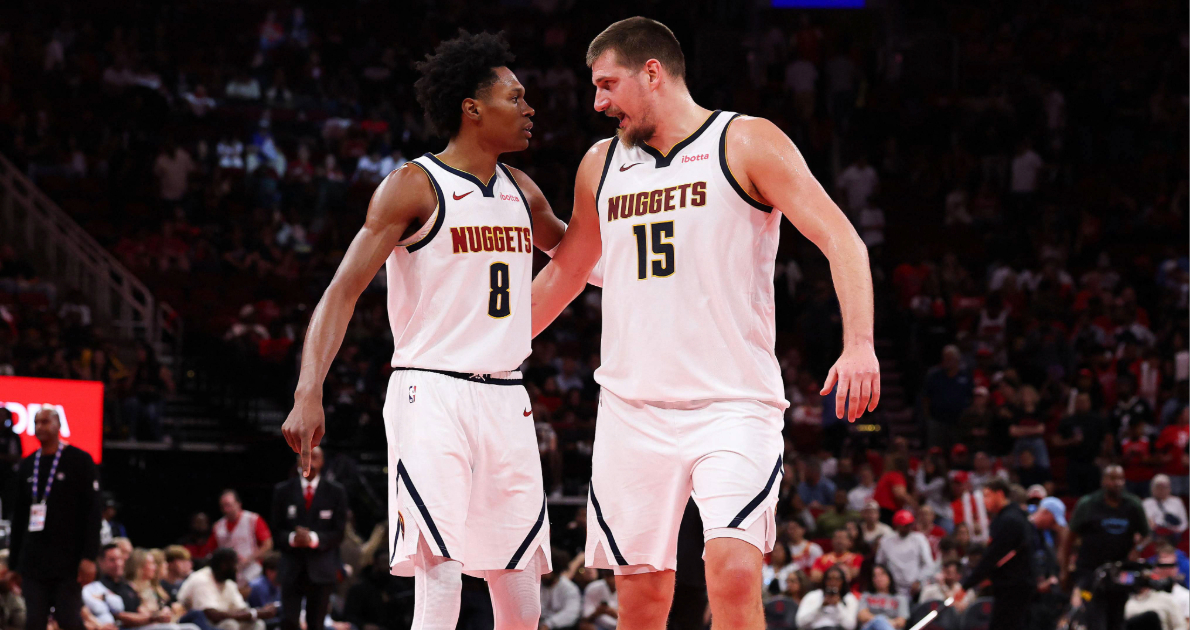
For the Nuggets, this is ultimately about choosing financial flexibility over continuity. Watson had just broken out, averaging 14.6 points and shooting 41.1% from three, and Denver had been trying to work through a difficult salary-cap situation around the second apron. The return is modest for a 23-year-old wing with that trajectory, putting even more pressure on Denver to maximize the Nikola Jokic window.
Note this is an after-effect of Oklahoma City Thunder tendering an offer sheet to Spencer Jones in late July, which Denver had to match to preserve its depth, but also made the hurdle to retain Watson even tougher. Quite the gamesmanship from OKC.
CAVALIERS
The Cavaliers are making the opposite bet. They have spent much of the offseason searching for a legitimate wing, and Watson gives them size, athleticism, defensive versatility and shooting alongside Donovan Mitchell, Evan Mobley and Jarrett Allen. The $88 million commitment says Cleveland doesn’t view him as merely a complementary piece – it sees Watson as part of the next version of its core. Adding Whitmore only reinforces that priority.
James Harden opting out of his player option and delaying his re-sign gave the Cavs flexibility – unless, of course, he suddenly bolts.
CLIPPERS
For the Clippers, Strus is less glamorous but potentially more immediately useful. He shot 40.2% from three last season and brings playoff experience to a roster still trying to establish an identity around a brand new core. After an offseason filled with uncertainty, the Clippers have opted for a proven rotation player rather than another developmental gamble.
WIZARDS
The Wizards are operating on a different timeline. Whitmore’s departure costs them a young talent, but with 2026 no. 1 overall pick AJ Dybantsa, plus veteran former All-Stars Trae Young and Anthony Davis, among others, ushering in a new era, the seemingly unsexy acquisition of Tre Mann, a journeyman back-up, is a good fit.
HORNETS
As for the Hornets, Schroder is another piece in a broader reset. Cleveland’s decision to move him was primarily about flexibility, while Charlotte gets a veteran guard after already reshaping its roster. The deal isn’t transformative, but it fits a franchise trying to establish a new identity. They just let LaMelo Ball go to allow rising wings Brandon Miller and Kon Knueppel to shine further, so they’ll get all the ball-handlers they can get.
Five teams, several transactions and one common theme: everyone is betting on a different version of the future.