
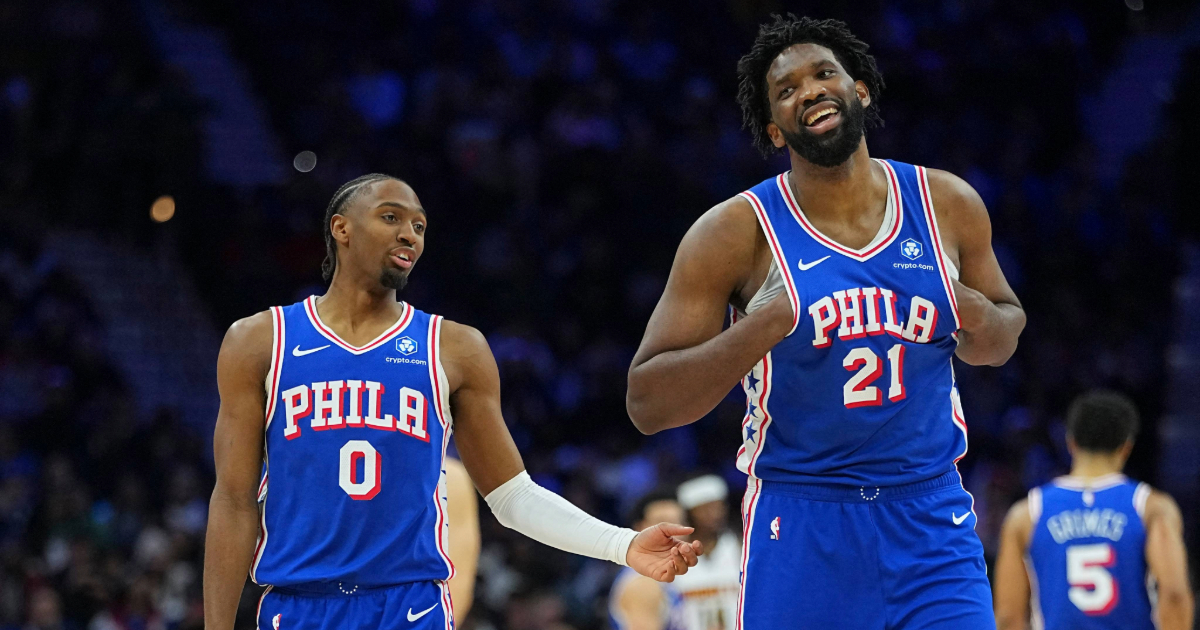



Heading into the 2025-26, and for much of the campaign, the Philadelphia 76ers felt like an afterthought, a bottom-ranked playoff team with a big question mark. Injuries were constant and the idea of them making real noise in the Eastern Conference seemed more theoretical than realistic. But, with the regular season winding down, the Sixers suddenly look alive – maybe even dangerous.
Philly is 41-33 and currently sitting seventh in the East, but the margin separating them from the fifth seed is razor-thin. A couple of wins – or losses from the teams around them – could swing their postseason path dramatically. That’s what makes their recent surge so intriguing. They’ve gone 6-2 over their last eight games, and more importantly, they’re finally getting contributions from the players they were built around.
That wasn’t the case a year ago. The 2024-25 season turned into a disaster almost immediately. Joel Embiid couldn’t stay on the floor – as per usual. Paul George, who signed to a massive deal worth roughly $40 million annually, struggled with injuries and inconsistency whenever he did play. Tyrese Maxey missed about 30 games himself, leaving the roster patchwork at best. The result was a disjointed, underwhelming season that stripped Philadelphia of any aura as a contender.
That hangover carried into this year. Even when healthy, the Sixers looked like a middling playoff team – solid in spurts, but not cohesive enough to trust. The offense often stalled, rotations were inconsistent, and the supporting cast felt more theoretical than functional.
Now, everything suddenly looks different.
Embiid and Maxey are both back and playing like themselves again. In Saturday’s thrilling win over the Charlotte Hornets, Embiid scored 29 points while Maxey added 26, with Paul George also chipping in 26 in a balanced effort that highlighted just how dangerous the trio can be when healthy. The offense looked fluid, the shot creation was layered, and the defensive intensity ticked up late – all signs of a team rediscovering its identity.
Beyond the stars, the supporting cast has quietly stabilized things. Quentin Grimes has been a reliable secondary scorer throughout the season, capable of spacing the floor and handling bigger offensive loads when needed. More importantly, rookie VJ Edgecombe has been a constant revelation. Beyond the athleticism, he’s flashed shot creation, playmaking, and composure well beyond his years.
Then there’s Paul George, whose season has been uneven but is trending upward at the right time. After returning from a 25-game suspension, he’s looked engaged on both ends, stuffing the stat sheet and providing the two-way presence Philadelphia envisioned when they signed him. When George is aggressive, the Sixers’ offense suddenly has multiple pressure points instead of relying solely on Embiid post-ups or Maxey isolation bursts.
That’s the biggest difference between this version of the Sixers and the one we saw for most of the season: balance. They’re not just surviving on talent – they’re finally functioning as a team.
Timing matters, too. The Eastern Conference middle tier is tightly packed, and momentum entering April can determine whether a team climbs to a favorable first-round matchup or gets stuck in the play-in gauntlet. Philadelphia suddenly has a chance to do the former.
It may be late, but the Sixers finally look like the team they were supposed to be. And if this surge continues, they won’t just be getting hot at the right time – they might be arriving just in time.